

Guide
Jun 26, 2026
Key takeaways
It does what a paper certificate does, online. Share it as a link and anyone can check it instantly
Badges built on the Open Badges standard can be verified the same way, whichever service issued them
Certi is Open Badges 3.0 certified and issues PDF certificates alongside every badge
How is it different from a paper certificate?
Certificates, awards, and licenses have been printed on paper for a long time. Just as textbooks moved from paper to screens, credentials are going digital too. A credential that is issued and verified online is a digital badge.
The job is the same: an organization confirms that someone completed their learning. The difference is what happens next. A paper certificate has to be scanned or copied, while a digital badge only needs a link.
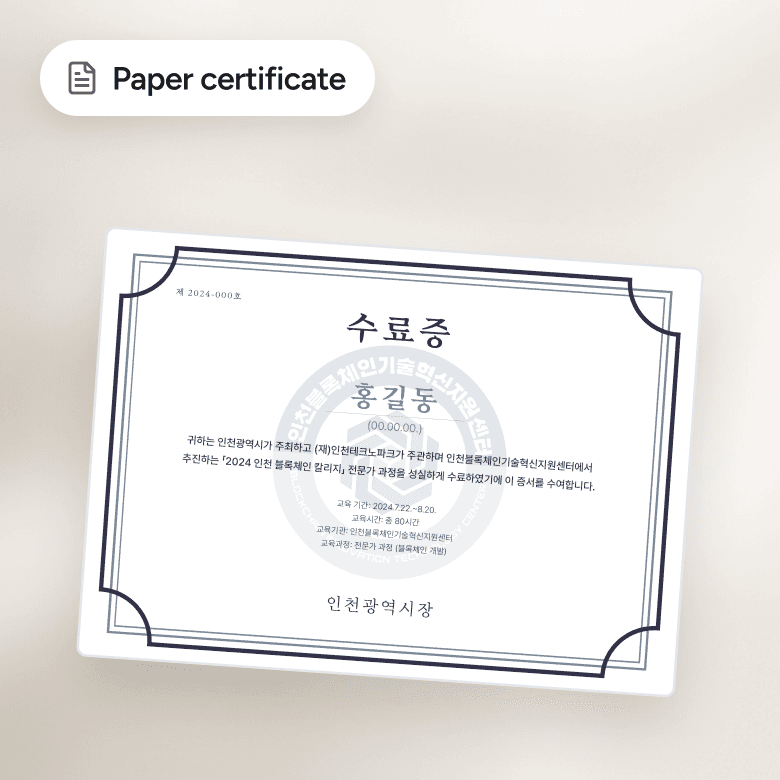
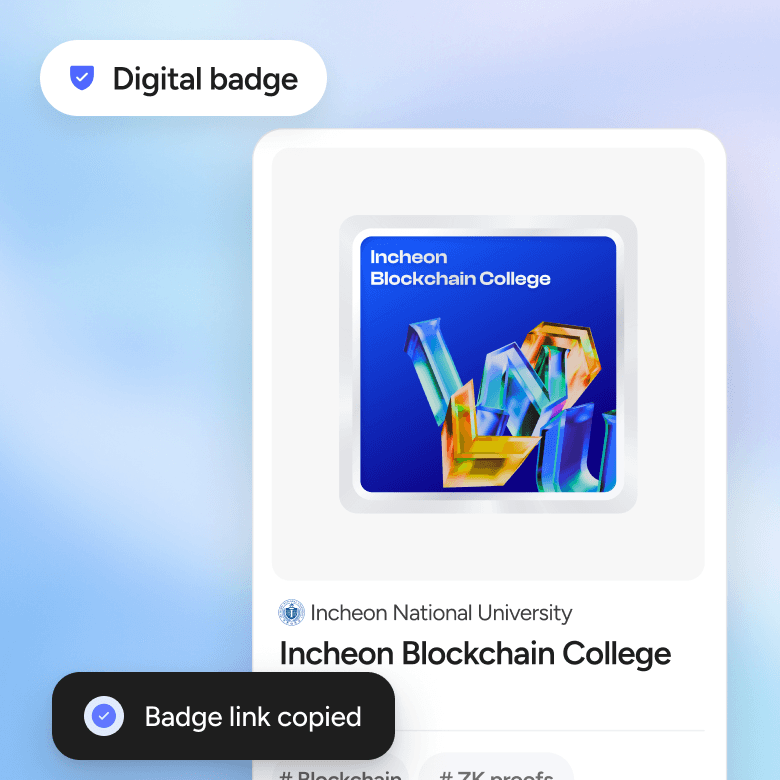
| Paper certificate | Digital badge | |
|---|---|---|
| Issuing | Printed, then handed out or mailed | Issued to a whole list at once and sent by email |
| Keeping | The original has to be kept safe | Stored online and always one click away |
| Sharing | Scanned or copied before submitting | Shared as a link or added to a résumé or portfolio |
| Verifying | You have to contact the issuer | The issuer and criteria are right on the badge page |
What information does a badge hold?
A badge is more than an icon. Behind the image is everything a certificate used to say.
So recipients can easily explain what they learned, and anyone viewing it can see exactly how it was earned.
Where are digital badges used?
Anywhere you would hand out a certificate or award. In 2023, Korea’s university newspaper reported that 150 Korean universities had adopted Open Badges.
- Schools (K-12): reading, clubs, and other activities with levels
- Universities: extracurricular programs, micro-degrees, lectures, and workshops
- Organizations and companies: job training, certification courses, and in-house learning
- Public education: courses run by local governments and education offices
Recipients can add the badge link to a résumé or the Licenses & certifications section on LinkedIn to show what they’ve learned.
What are Open Badges, and why do they matter?
Many companies make digital badges, so there is an international standard that aligns what a badge contains and how it’s verified: Open Badges1. Badges that follow it can be verified the same way, whichever service issued them.
Certi is Open Badges 3.0 certified. You can create standards-compliant badges without studying the standard yourself.
How do you know a badge is genuine?
Two things to check: was it issued by a trustworthy organization, and has it stayed unchanged since it was issued?
Verified issuer mark
Only organizations whose identity was confirmed with official documents get the verified mark.
Checked against the issuing record
You can confirm that what you see matches the original issuing record.
The issuing record is kept on a blockchain2, so anyone can check that the badge still matches what was recorded when it was issued.
How do you get started with Certi?
Start with a program where you already hand out certificates. The course details and a list of graduates are all you need. See how to create a digital badge for the steps, and issuing PDF certificates alongside badges for PDF certificates.
Frequently asked questions
Q
Are digital badges and Open Badges the same thing?
Digital badge is the broad term for online credentials. Open Badges are the ones that follow the international standard.
Q
If I get a digital badge, can I still get a paper certificate?
Yes, if the organization issues both. Certi provides a PDF certificate with the same information alongside every badge.
Q
Where can I use a badge I've received?
Send the link in a message, add it to your résumé or portfolio, or list it under Licenses & certifications on LinkedIn.
Q
How can I tell the issuer is real?
Certi only gives the verified mark to organizations confirmed with official documents. Look for the mark next to the issuer's name.
Need digital badges? Let's talk
Contact sales
Keep reading
All posts


