
Guide
Aug 21, 2026
Key takeaways
Around three tiers are easiest to read. Participation, completion, and distinction are the usual set
Write separate criteria for each tier so the difference is clear
Keep one design and change only the color so they read as a set
Why split badges into tiers?
With a single badge, someone who attended once gets the same badge as someone who completed everything. With tiers, recipients can show how far they got, and they have a reason to aim for the next level.
How do you set the tiers?
Most programs use three tiers: participation, completion, and distinction.
| Tier | Example criteria | Who it's for |
|---|---|---|
| Participation | Attended at least one session | First-time participants |
| Completion | 80%+ attendance and a submitted final piece | Those who finished the course |
| Distinction | Met completion criteria and ranked in the top 10% | Those with outstanding results |
Split too finely and neither recipients nor viewers can explain the difference. Around three tiers is about right.
Write criteria for each tier
Every badge carries its criteria. For a distinction badge, include both the completion requirements and the distinction criteria, so anyone can see the difference between the two badges right away.
What does this look like in practice?
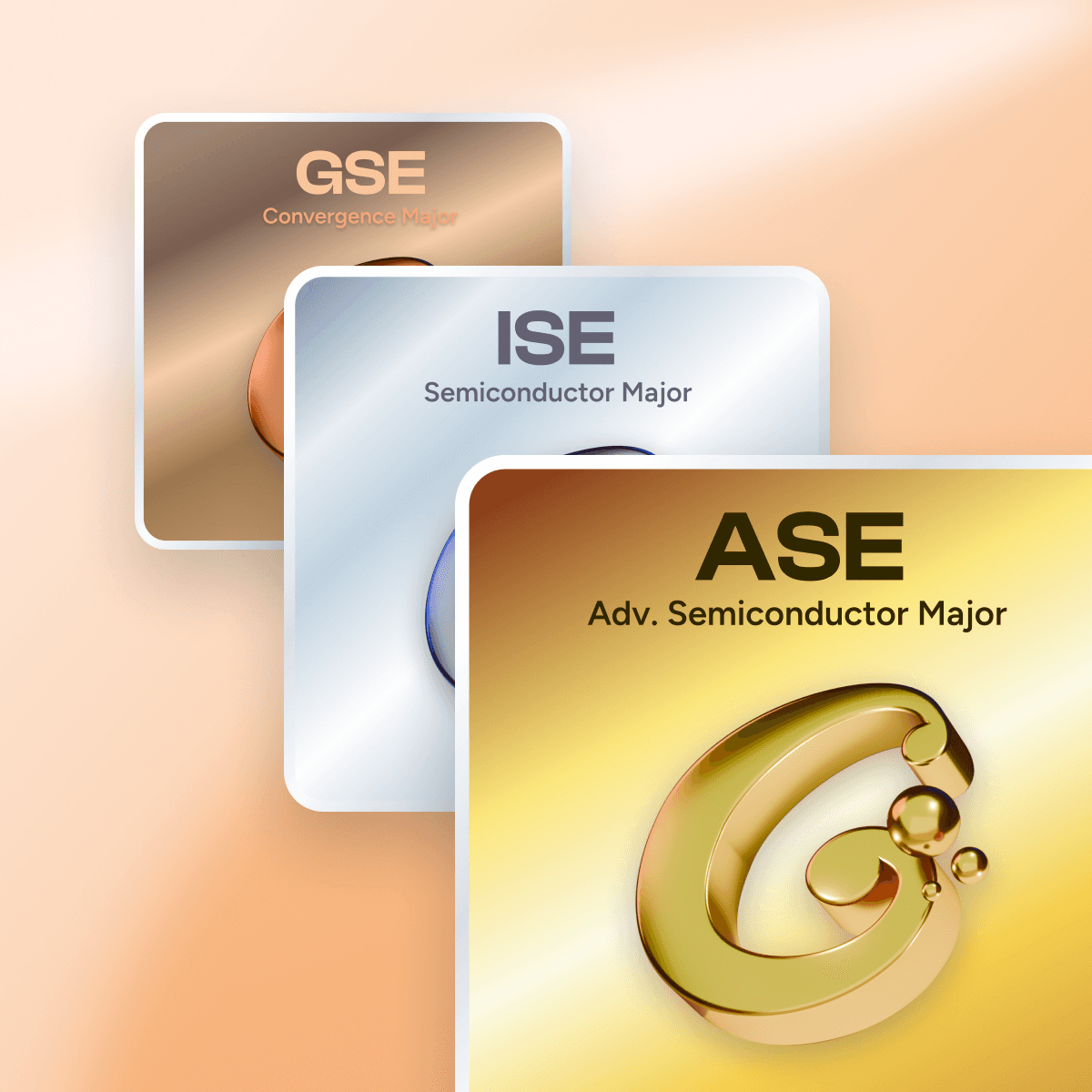
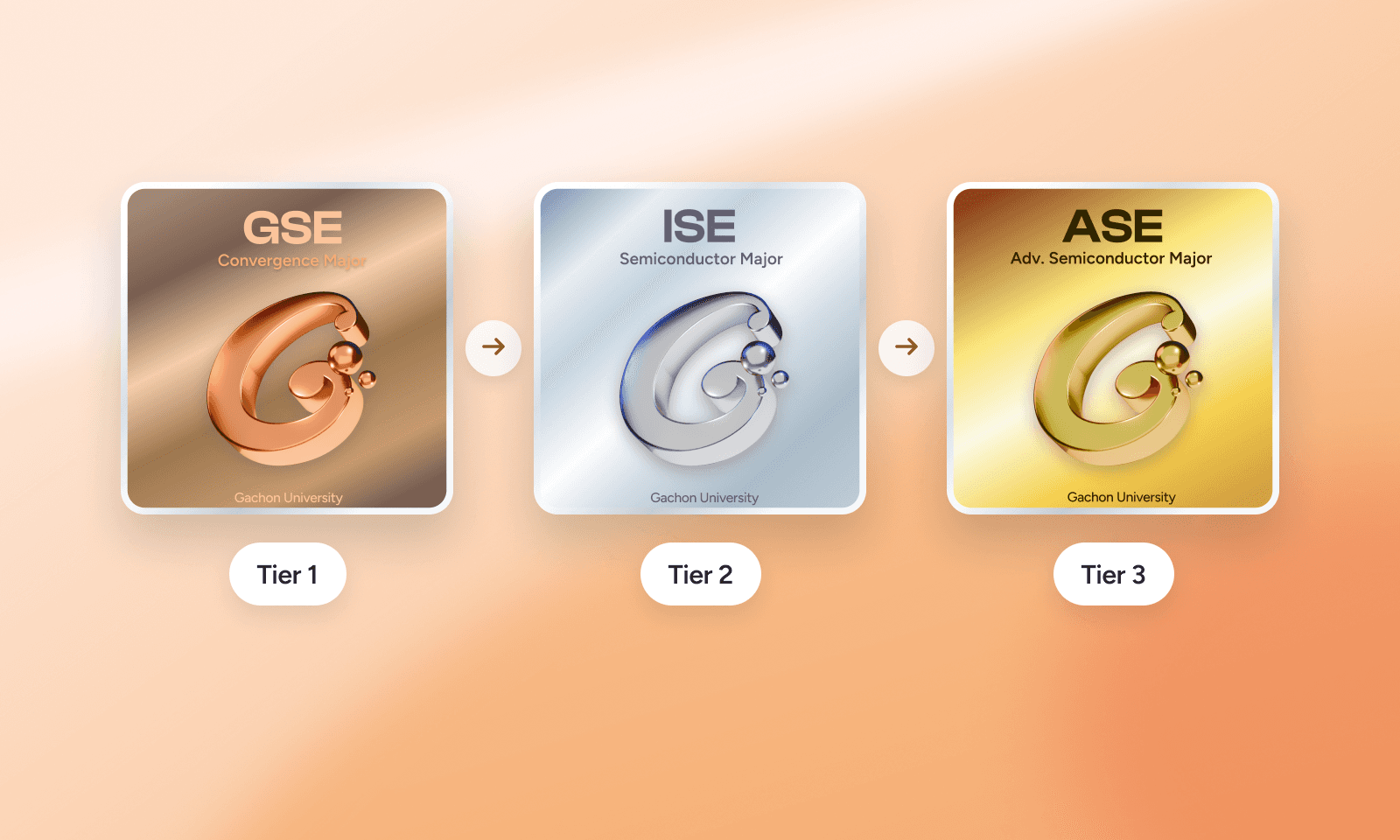
Gachon University’s Semiconductor Specialized University Program gives three badges, GSE, ISE, and ASE, to students with top academic records. The program’s information page lists the eligible majors and selection criteria for each badge separately.
| Badge | Eligible majors | Selection criteria |
|---|---|---|
| GSE | Semiconductor Convergence Major | GPA 3.0+, 21+ major credits, Semiconductor Industry Seminar completed, TOEIC 700+ |
| ISE | Semiconductor Specialized Major, Advanced Semiconductor Major | GPA 3.5+, 30+ major credits, Semiconductor Industry Seminar completed, TOEIC 700+, IAB review |
| ASE | Advanced Semiconductor Major | GPA 4.0+, 66+ major credits, Semiconductor Industry Seminar completed, TOEIC 750+, P-practical project score of 80+, IAB review |
Each step up raises the bar on the same items and adds conditions that only the higher tiers have (IAB review, P-practical project). Written out like this, anyone can tell the three badges apart at a glance. For more on the program, see the Gachon University case study.
Design them to read as one set
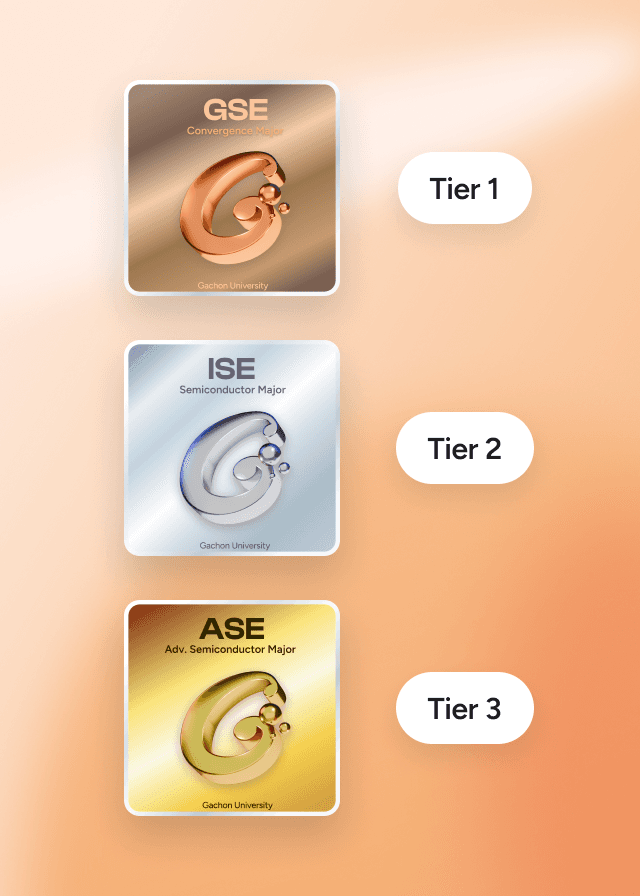
Tiered badges read as a set when they share one design and change only the color or finish. Use an order everyone knows, like bronze, silver, and gold, and the tiers explain themselves.
How do you build them in Certi?
Create one badge per tier, write its criteria, and issue it to the matching list. See how to create a digital badge for the steps.
Frequently asked questions
Q
How many tiers should we have?
We recommend around three. Both recipients and viewers can understand the difference easily.
Q
Can one person earn badges from several tiers?
Yes. Each tier is issued as its own badge, so learners can collect them in order, from participation to distinction.
Q
Does this work for K-12 activities too?
Yes. Any activity with levels, such as reading, volunteering, or skill grades, can be split the same way.
Turn your program's levels into badges
Contact sales
Keep reading
All posts


