

Guide
Jul 3, 2026
Key takeaways
The K-MOOC Digital+ program bundles several courses into a curriculum that awards digital badges
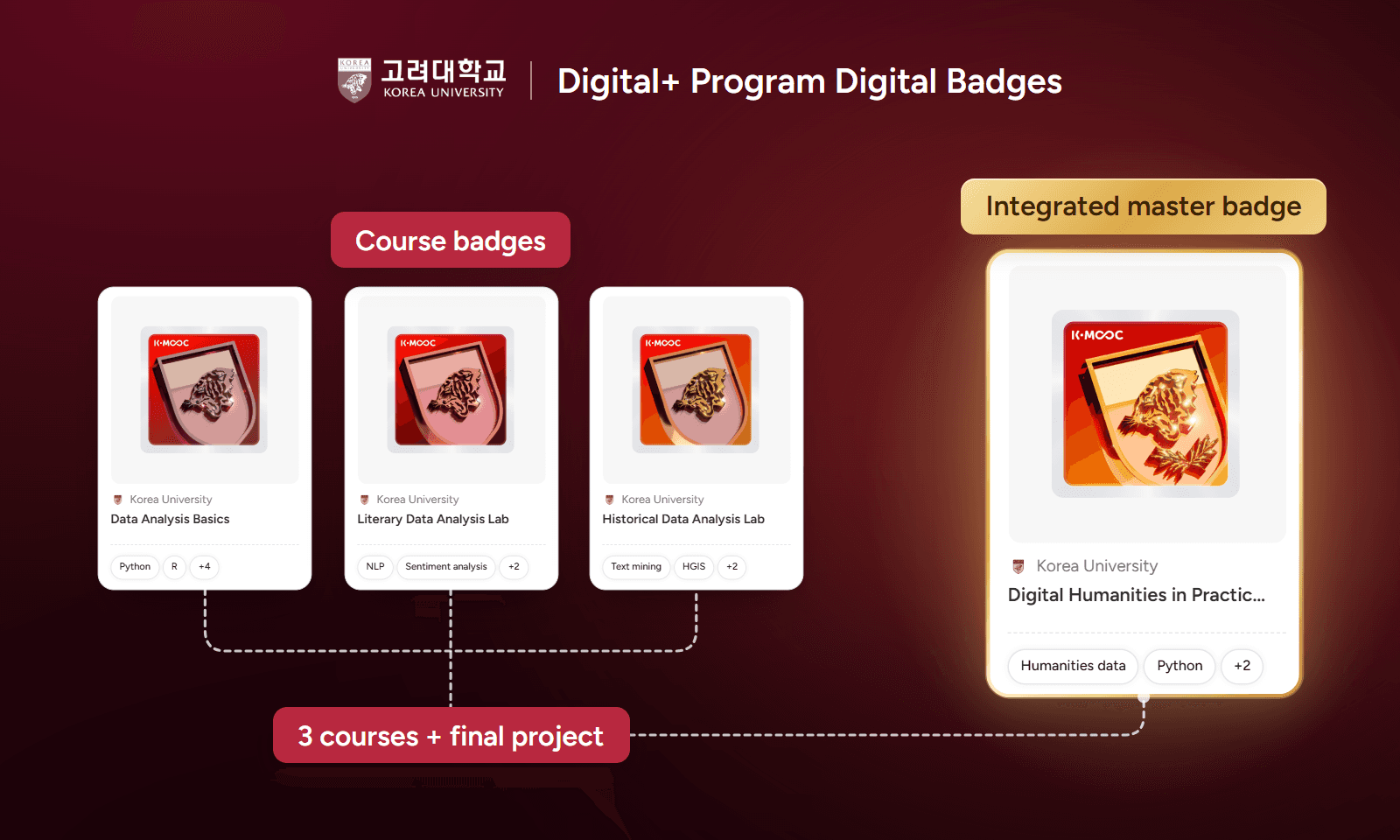
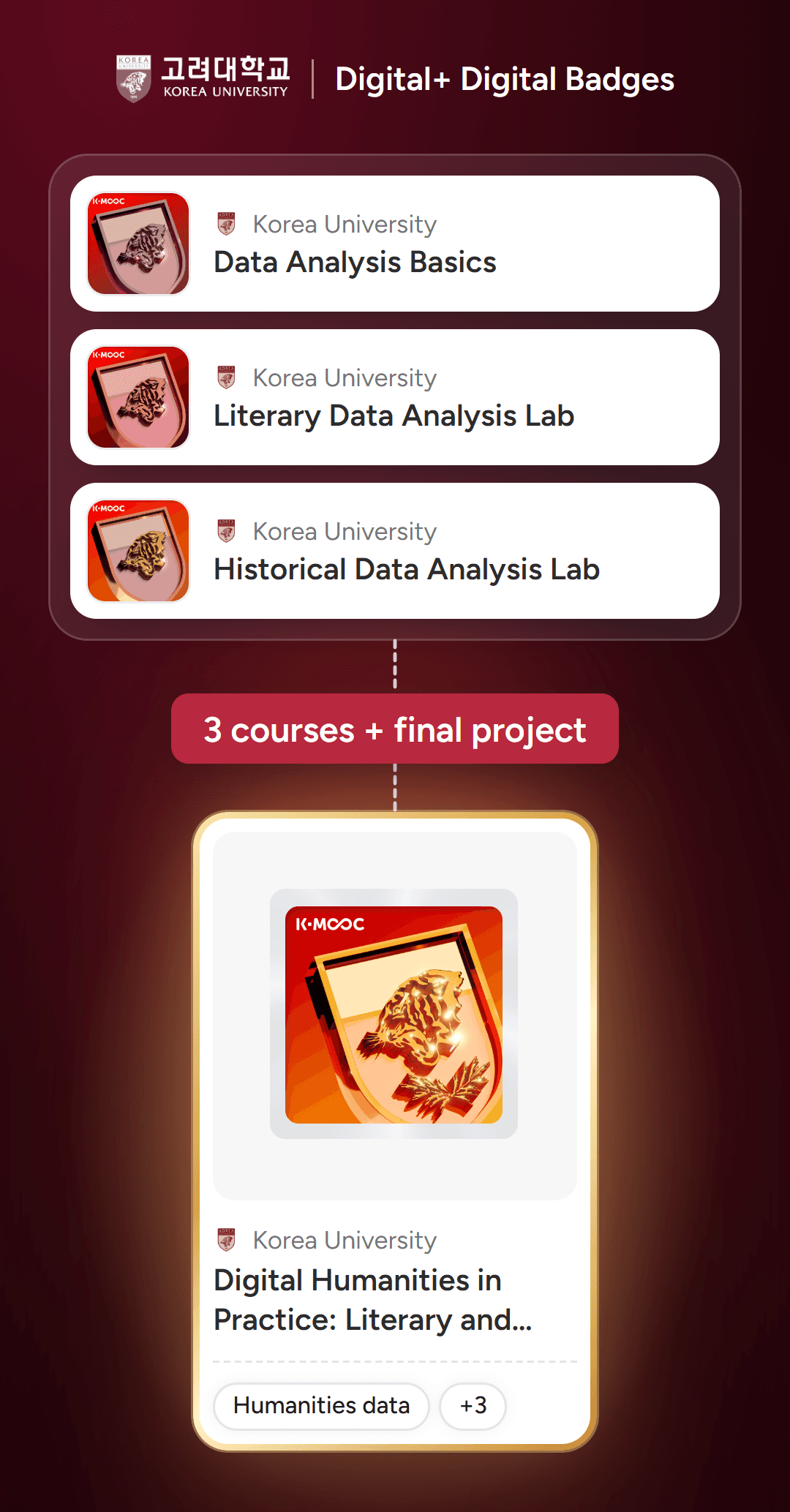
Korea University issues a badge for each of its three courses, and an integrated master badge for finishing them all
Each badge lists the skills learned in the course, such as Python, natural language processing, and HGIS
What is the K-MOOC Digital+ program?
K-MOOC (Korean Massive Open Online Course) is Korea’s national MOOC platform, where anyone can take university courses online. Its Digital+ program bundles several courses into a skills-based curriculum for building digital skills, and learners receive a digital badge when they finish.
Through this program, Korea University launched Digital Humanities in Practice: Collecting and Analyzing Literary and Historical Data. It has three courses over 18 weeks: Data Analysis Basics, Literary Data Analysis Lab, and Historical Data Analysis Lab. Learners start with the basics of Python and R and move on to project-based work with literary and historical data. The goal is to train “humanities data analysts” who combine theory and practice.
How do learners earn the badges?
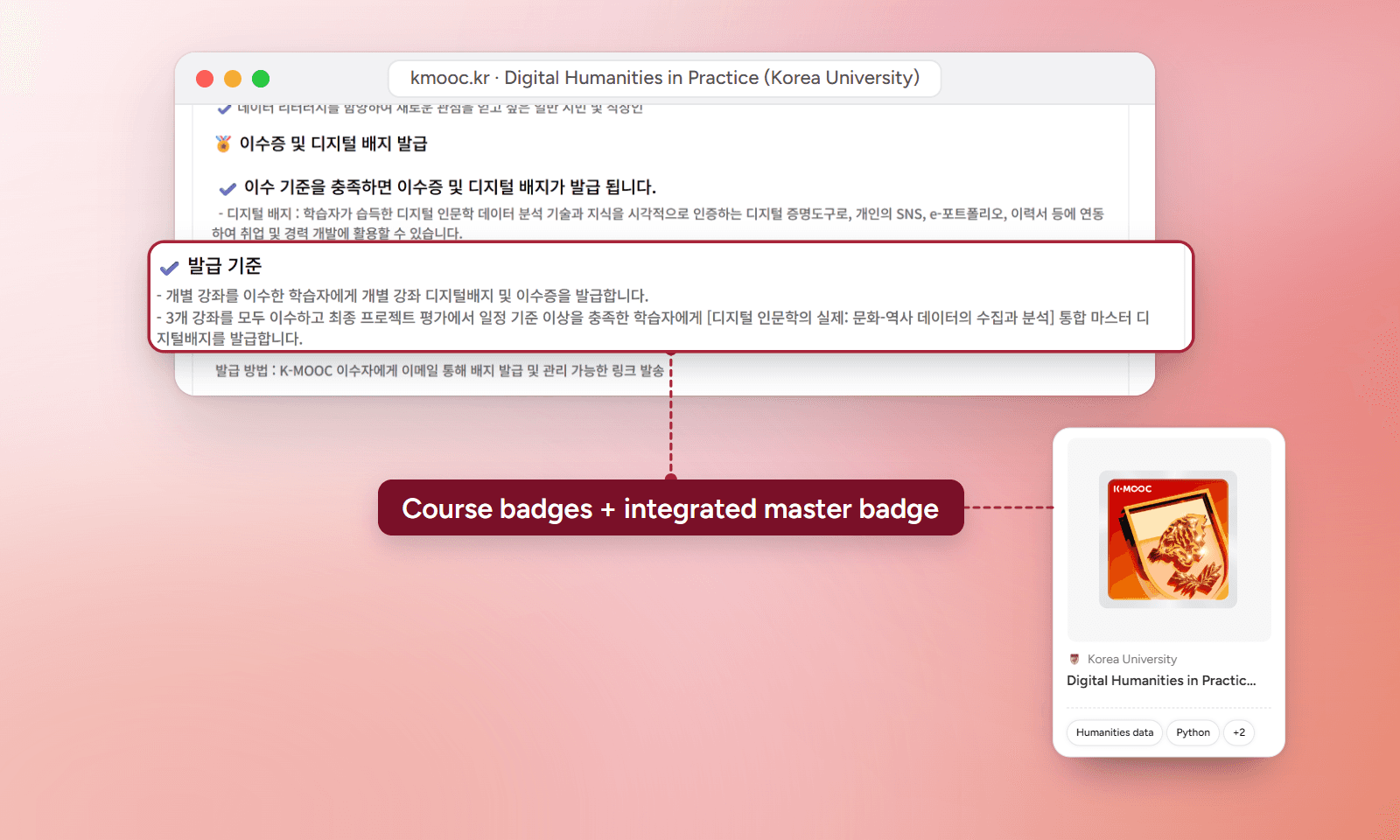
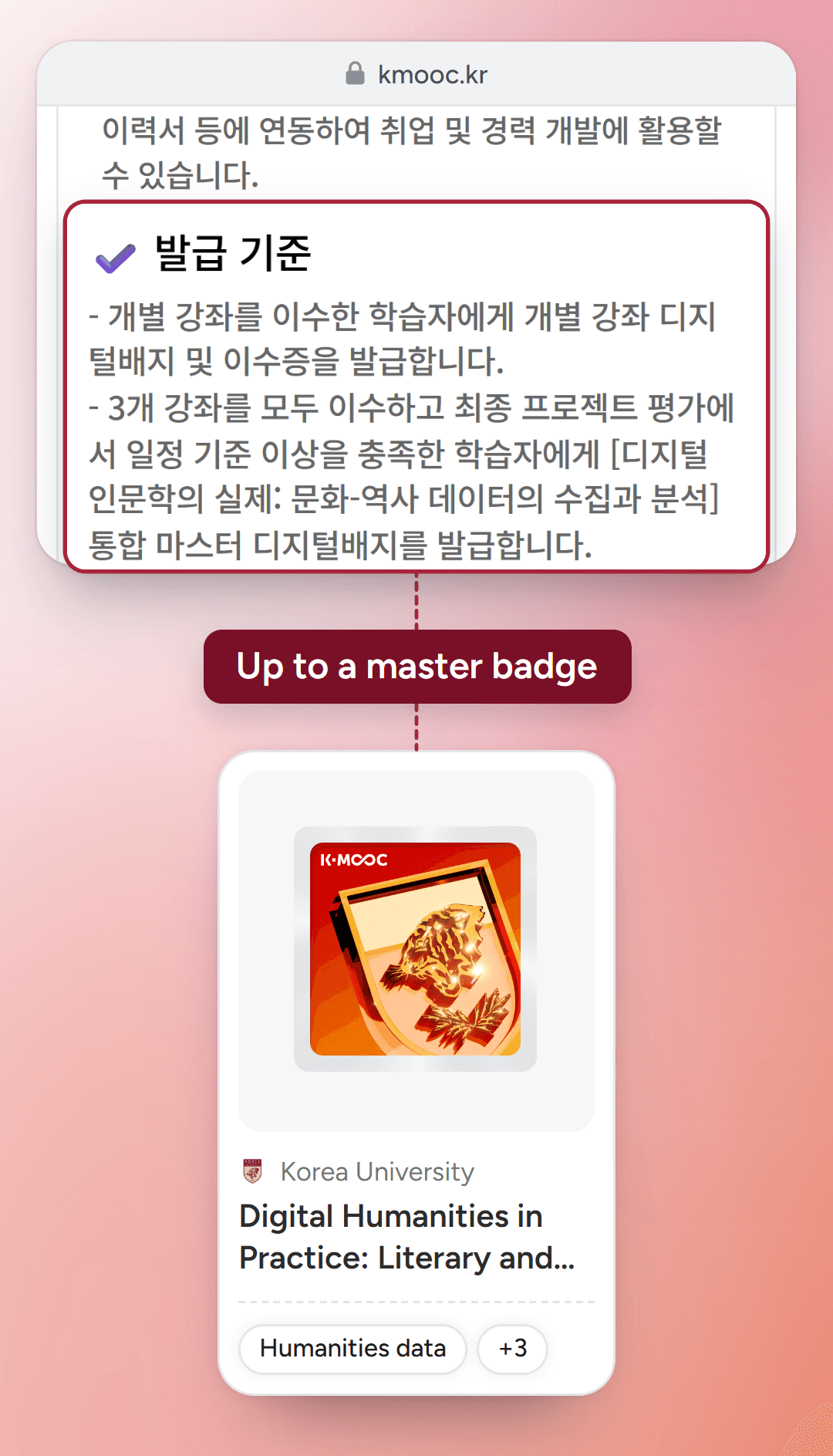
Finishing a course earns that course’s digital badge and a certificate of completion. Learners who finish all three courses and pass the final project assessment earn the integrated master digital badge.
What skills does each badge show?
| Badge | Skills |
|---|---|
| Data Analysis Basics | Python and R basics, data preprocessing and visualization, basic statistics, regular expressions |
| Literary Data Analysis Lab | Natural language processing (NLP) basics, tokenization, sentiment analysis, topic modeling, finding literary patterns and themes |
| Historical Data Analysis Lab | Digital history methods, text mining, time-series and network analysis, HGIS visualization |
| Integrated master badge | All 3 courses completed + final project assessment passed |
All four badges share the K-MOOC tiger shield and differ only in color. Even when earned one at a time, they clearly belong to one program, and the integrated master badge stands out in the brightest gold.
How were the badges issued?
Upload the completion list
Upload a spreadsheet of learners who met each course's completion criteria
Send badges and management links
Graduates receive their badge by email and manage it from the link
Use the link and the PDF
Add the badge link to social media, an e-portfolio, or a résumé, or download a PDF certificate
Along with badge usage guidelines, Certi created sharing guidelines for posting badges on LinkedIn and the Korean job sites Saramin and JobKorea, and shared them with learners. For more on PDF certificates, see issuing PDF certificates alongside badges.
Frequently asked questions
Q
Do we need a separate badge for every course?
Not necessarily. You can offer course badges plus an integrated badge, like Korea University, or a single badge for the whole program.
Q
How do learners earn the integrated master badge?
By completing all three courses and meeting the required standard in the final project assessment.
Q
How do recipients use their badges?
They add the badge link to social media, an e-portfolio, or a résumé, or download a PDF certificate from the badge page to submit.
Add badges to your courses
Contact sales
Keep reading
All posts


